
The wind turbine nacelle is a dense machine room suspended 80–120 m above the ground, carrying the main bearing, gearbox (if present), generator, transformer, and all associated auxiliary systems. Everything inside — cable trays, conduit runs, hydraulic lines, instrument boxes, fire suppression cylinders — has to be mounted to the structural steel frame without drilling the nacelle bedplate or welding on-site. Beam clamps make this possible.
§ 01 The nacelle structural environment
The nacelle frame is typically a welded steel structure with I-beam or box-section members. In the factory, all primary drilling and welding is completed; on-site installation and subsequent modifications must use clamping solutions that attach to existing beam flanges. The environment inside an operating nacelle is warm (up to 45–55 °C near the transformer), has vibration from the drivetrain at 0.5–3 Hz (rotor fundamental) and higher harmonics, and in offshore nacelles will carry elevated humidity and chloride aerosol through ventilation systems.
Weight is also a design driver: every kilogram added at nacelle height increases tower and foundation loads. Beam clamp bodies need to be strong enough for the application but not overspecified.
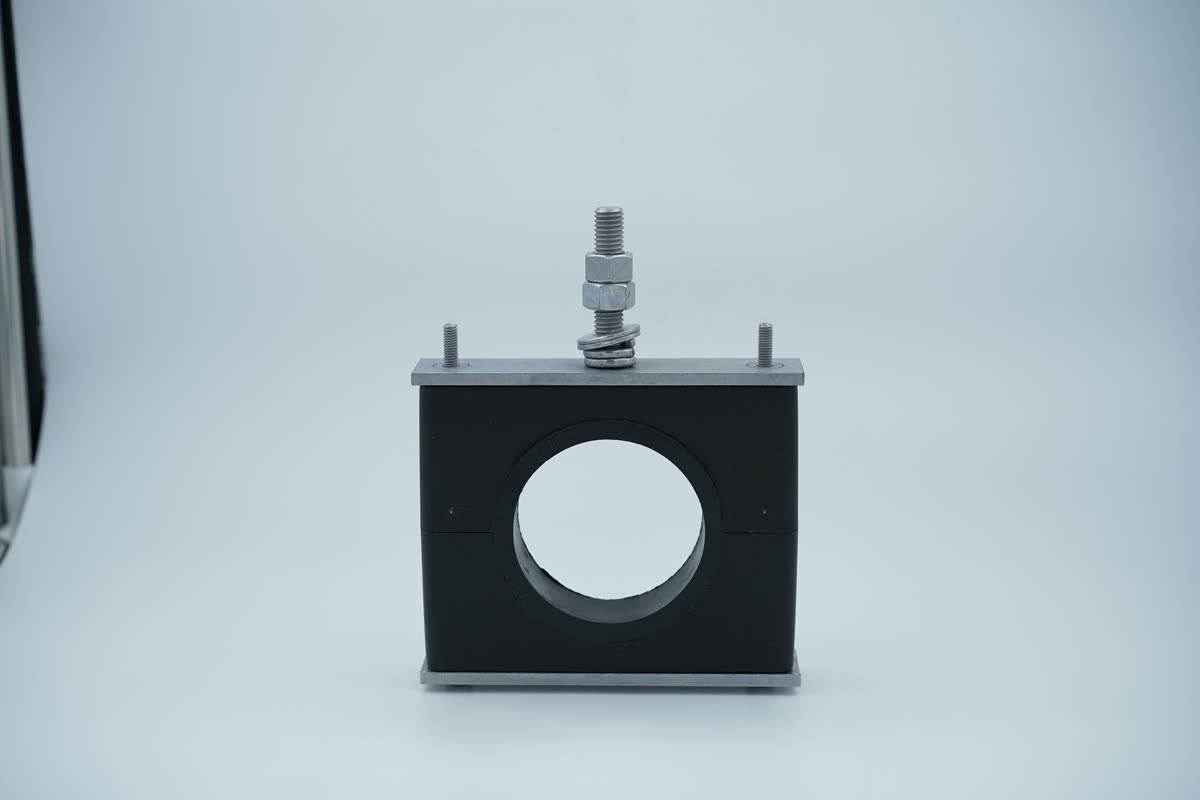
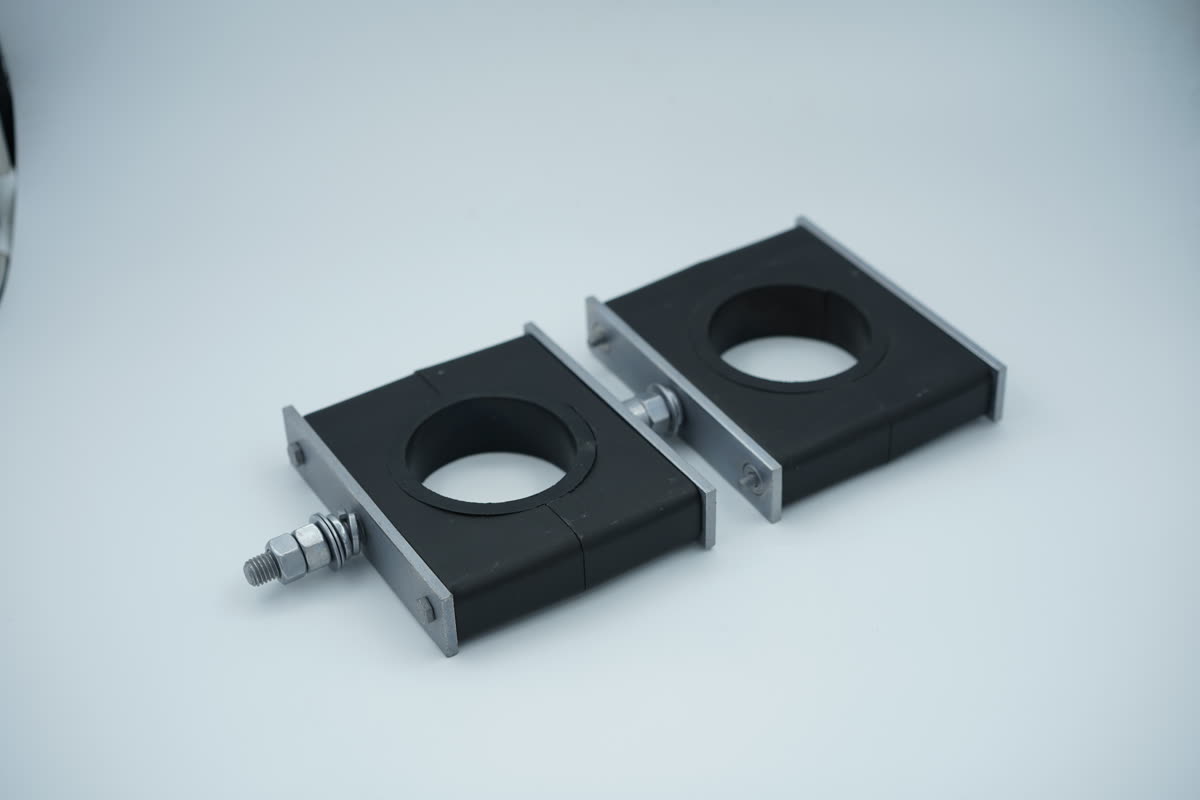
§ 02 Beam clamp types used in nacelles
Several beam clamp configurations are standard in wind turbine nacelles:
- Jaw-type beam clamp: a U-body with a threaded jaw that tightens against the beam flange underside. The hanging load is taken by the clamp jaw on the flange. Suitable for vertical hanging loads (cable trays, conduit bundles, junction boxes). Available with fixed or swivel attachment points.
- Side-entry beam clamp: slides onto the beam flange from the side; the clamp bolt tightens against the flange edge. Used where access above the beam is restricted. Commonly used on the nacelle overhead structure for cable tray support.
- Purlin clamp / C-clamp: grips thin-flanged sections such as secondary purlins or cable tray cross-members. Lower load capacity but compact for secondary routing.
- Top-flange clamp: sits on top of the beam flange and is tightened from below. Used where upward forces (vibration, wind) must be resisted in addition to gravity loads.
§ 03 Load capacity and vibration resistance
The working load limit (WLL) of a beam clamp depends on the beam flange thickness range, the bolt size and grade, and the clamp body section. Typical WLL values for standard jaw-type clamps range from 0.3 kN to 10 kN. For nacelle use, the relevant load cases are:
- Static gravity load: weight of cable tray, cables, conduit, or equipment.
- Dynamic vibration load: drivetrain vibration transmitted through the frame. IEC 61400-1 and site-specific vibration spectra should be consulted for sensitive components; for general secondary support, a dynamic amplification factor of 1.5–2× static is typically applied.
- Transport and installation loads: nacelle assembly involves crane lifts and travel over uneven terrain before installation. Clamp connections must not loosen during pre-assembly transport.
Self-locking or spring-loaded clamping mechanisms, or double-nut configurations on the clamping bolt, prevent loosening under vibration. Plain single-nut clamps rely on friction and should be supplemented with thread-locking compound or lock washers for nacelle installations.
§ 04 Material and finish selection
For onshore nacelles, hot-dip galvanised (HDG) steel beam clamps are the standard choice — they are low cost, well corrosion-protected in enclosed environments, and readily available in all standard beam flange ranges. A2 stainless is acceptable but unnecessary cost for enclosed onshore use.
For offshore nacelles, the elevated chloride environment (C4–C5-M internal) makes A4-80 stainless steel the preferred option for clamps that will not be routinely inspected. HDG steel is acceptable with a documented re-inspection interval (typically 5 years) and corrosion allowance in the design. The broader material selection logic for offshore components is in stainless steel clamps for offshore platforms.
Where beam clamps contact dissimilar metals — for example, a stainless clamp on a hot-dip galvanised beam — galvanic coupling should be managed with insulating washers or a painted interface to protect the zinc coating. Details are in preventing galvanic corrosion between dissimilar metals.
§ 05 Installation tips specific to nacelles
- Verify the beam flange thickness before ordering — jaw-type clamps have a minimum and maximum flange thickness range, and specifying the wrong range produces a clamp that cannot engage correctly.
- For overhead installations, use clamps with a safety pin or secondary retention (secondary wire rope or chain anchor point) where a falling clamp would create a hazard — working at height regulations in most jurisdictions require secondary retention for overhead suspended loads in occupied work areas.
- Torque the clamping bolt to the manufacturer's value; under-torquing is the most common cause of clamp slip. A scribed reference line across the clamp jaw and flange confirms whether the clamp has moved at the first service inspection.
- Keep the load attachment point as close to vertically below the clamp as possible; eccentric loading substantially reduces the effective WLL of most jaw-type clamps.